


I Travelled to China Just Before the 30-Day Visa-Free Era — Here’s What 2026 Travellers Should Know
In February 2026, China quietly removed one of the biggest barriers for UK and Canada travellers: the visa.
But I arrived just before that happened.
From December 2025 into early 2026, I was traveling through southern China — revisiting Guangzhou, the capital city of Guangdong Province (also known as Canton) and later heading to Haikou, the capital of tropical island Hainan, the southern-most province of the People's Republic of China.
It was a fascinating moment to be there.
It felt like standing at the edge of a shift.
The infrastructure was ready. The cities were functioning effortlessly. Yet the paperwork still existed — one last administrative hurdle before the gates opened wider.
And here’s what I think future visitors should understand — and why 2026 might be a uniquely interesting time to visit.
Check out my video about visiting Guangzhou from late 2025 to New Year 2026
The biggest misconception about travel to China in 2026 isn’t political.
It’s practical.
Many people assume that removing the visa requirement suddenly makes China “easy.”
It doesn’t.
It makes China accessible — which is different.
The visa was the psychological barrier. The friction point. The thing that made people hesitate.
With the 30-day visa-free China policy now in place for eligible travellers, that hesitation disappears.
But China itself hasn’t changed.
And that distinction matters.
Remove the visa requirement, what remains is a highly functional, technologically advanced country that is far easier to navigate than many assume.

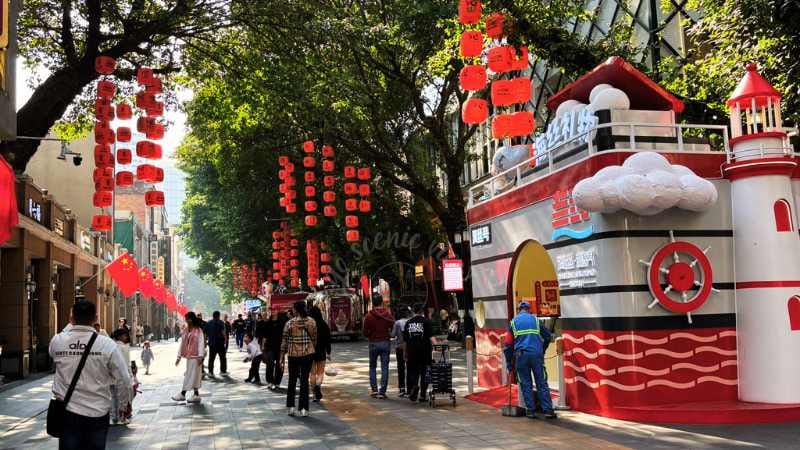
Beijing Road, Guangzhou 2026 ©
Before February 2026, I still needed to apply for a tourist visa.
The process wasn’t difficult, but it required intention:
Documentation
Planning
Submission
Waiting
Fees (Up to 2-year regular visa £130, or Express visa £161)
It made the trip feel deliberate.
Now, for UK travellers searching “China visa free UK 2026”—the answer is simple:
From 17 February 2026, UK passport holders can visit China for up to 30 days without applying for a tourist visa in advance.
That alone will encourage more spontaneous trips.
The new visa-free policy removes that entire layer of friction. And psychologically, that matters more than people realise.
Because for many travellers, it’s not the complexity of China that deters them.
It’s the commitment.
Visa-free access transforms China from a “planned expedition” into a “possible trip.”
And that shift alone may change who chooses to visit in 2026.
But paperwork was never the hardest part of China travel.
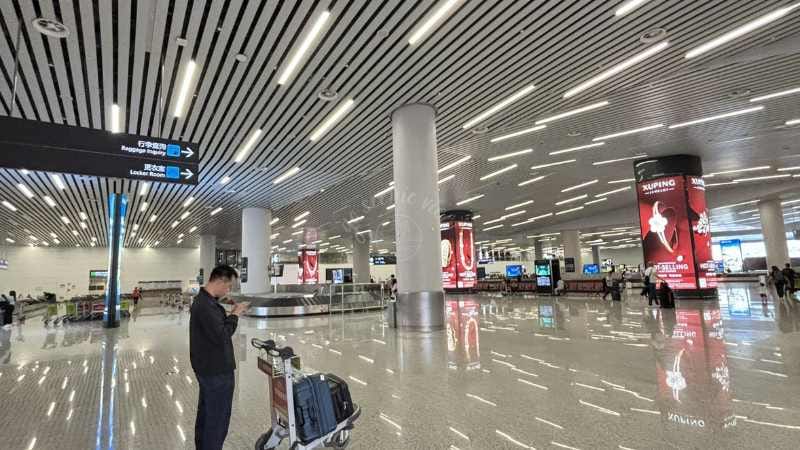
Guangzhou Baiyun Airport ©
There’s often anxiety about arriving in China for the first time.
My experience? Calm and procedural.
Immigration was:
Professional
Organised
Efficient
Uncomplicated
No hostility. No drama. Just structure.
If anything, what stood out was how prepared the system already felt.
The infrastructure doesn’t need to “catch up” with visa-free tourism. It’s ready.
The real bottleneck was always paperwork — not capacity.
Returning to Guangzhou in winter 2026 reminded me why this city is compelling.
It doesn’t try to charm you.
It operates.
Metro systems glide beneath a skyline of glass towers.
Business districts pulse with activity.
More than just the home of Dim Sum, Guangzhou is a microcosm of the Chinese palate, seamlessly blending its local heritage with the full spectrum of the nation’s culinary traditions
Unlike Beijing or Shanghai, Guangzhou doesn’t feel curated for international visitors. It feels domestic, commercial, self-contained.
And that’s part of its appeal
Western tourists were few with the exception of the Canton Fair seasons (see below). English wasn’t universal. But the systems worked flawlessly.
Canton Tower, Guangzhou, China ©
One of the biggest reasons international visitors travel to Guangzhou is the world-famous Canton Fair.
First held in 1957, the Canton Fair is China’s oldest and most established international trade exhibition. It remains one of the largest import–export trade fairs in the world and a key platform for connecting global buyers with Chinese manufacturers.
The fair is held twice a year — in spring and autumn — at the massive China Import and Export Fair Complex on the banks of the Pearl River.
Each session typically attracts:
tens of thousands of Chinese exporters
hundreds of thousands of international buyers
companies from industries ranging from electronics to textiles and household goods
For decades, the Canton Fair has been one of the primary gateways through which foreign businesses establish trade relationships with Chinese manufacturers.
Why the Canton Fair Matters Even More in the Visa-Free Era
With the introduction of China’s 30-day visa-free policy for several countries in 2026, attending the Canton Fair may become significantly easier for international visitors.
Previously, business travellers often needed to plan weeks in advance to obtain the appropriate visa. Now, eligible visitors can potentially travel to China on shorter notice to attend the fair.
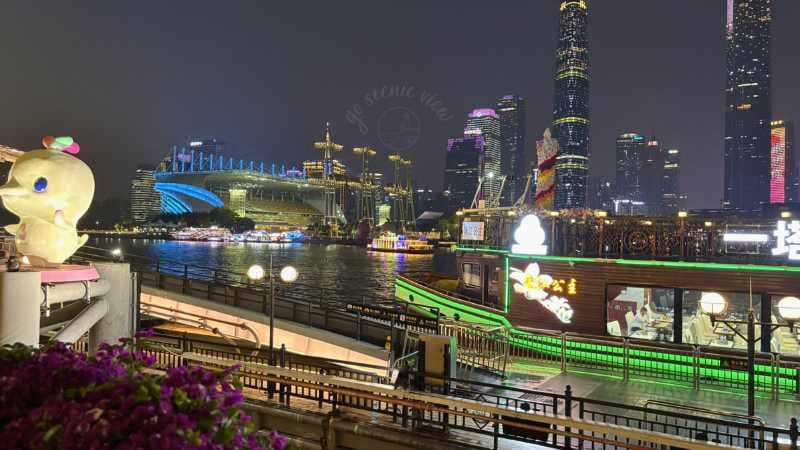
Pearl River Scenic Zone at night ©
This change could make Guangzhou even more attractive as a business destination.
For entrepreneurs, importers, and product designers, the Canton Fair offers something that few other trade events in the world can match direct access to a vast network of manufacturers in one place.
Visiting Guangzhou During the Canton Fair
If you visit Guangzhou during the fair period, you’ll notice a very different atmosphere.
Hotels fill quickly. International visitors become much more visible. Restaurants, cafes, and business districts buzz with activity as buyers and suppliers meet, negotiate, and network.
Even if you’re not attending the fair itself, the event gives a fascinating glimpse into China’s role in global trade.
It’s also a reminder that Guangzhou is not just a historic cultural city — it remains one of China’s most important international commercial hubs.
A City Built on Trade
Long before modern exhibitions existed, Guangzhou was already a key port in China’s trading history.
Today, the Canton Fair continues that legacy, bringing together businesses from around the world in the same city where merchants have been exchanging goods for centuries.
For travellers visiting Guangzhou in 2026, the fair highlights something essential about the city:
Guangzhou isn’t just a tourist destination.
It’s a working global marketplace.

Bruce Lee Ancestral Home in Yongqing Fang Guangzhou ©
Visa-free entry removes paperwork.
It does not remove China’s digital ecosystem.
China is now effectively cashless.
Alipay and WeChat Pay are not conveniences — they are infrastructure.
If you arrive without preparing payment apps in advance, you will feel friction quickly.
This is where expectations need adjusting.
The 30-day visa-free China policy simplifies entry.
It does not simplify daily navigation.
Preparation still matters.
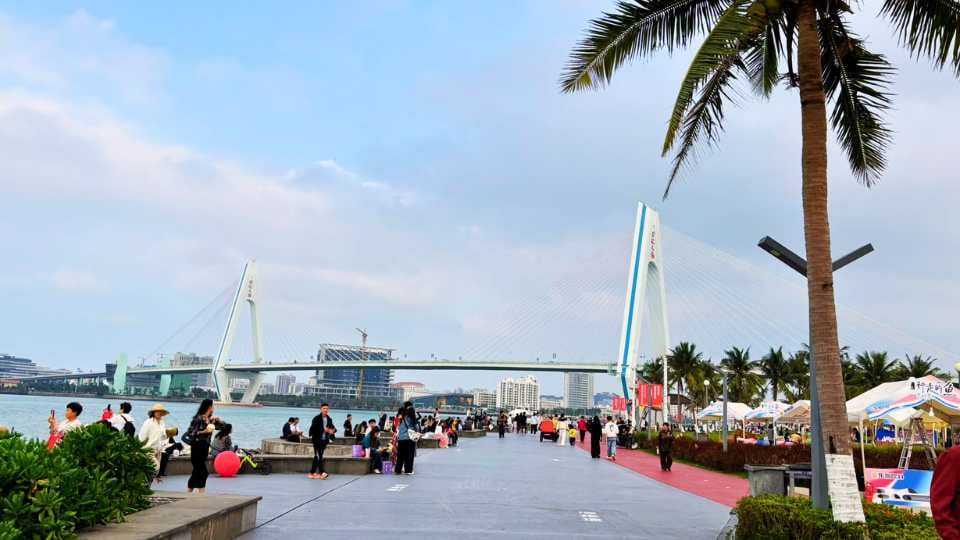
Haikou waterfront promenade ©
From Guangzhou, I flew south to Haikou, the capital of Hainan Province, and the Garden City of the South.
Known as the "Coconut City", Haikou is a palm-fringed metropolis with amazing beaches.
December air was soft and humid. Palm trees lined wide boulevards. Domestic tourists filled beachfront promenades.
Hainan feels strategic.
Retail expansion, resort developments, infrastructure upgrades — the signals are clear. The province is positioning itself for long-term tourism growth.
But in early 2026, it still felt overwhelmingly domestic.
Western travellers were rare.
English signage was more limited than in major tier-one cities.
If inbound tourism rises significantly under the China visa free UK 2026 policy, southern China — particularly Hainan — may change quickly.
Right now, it feels like a preview.
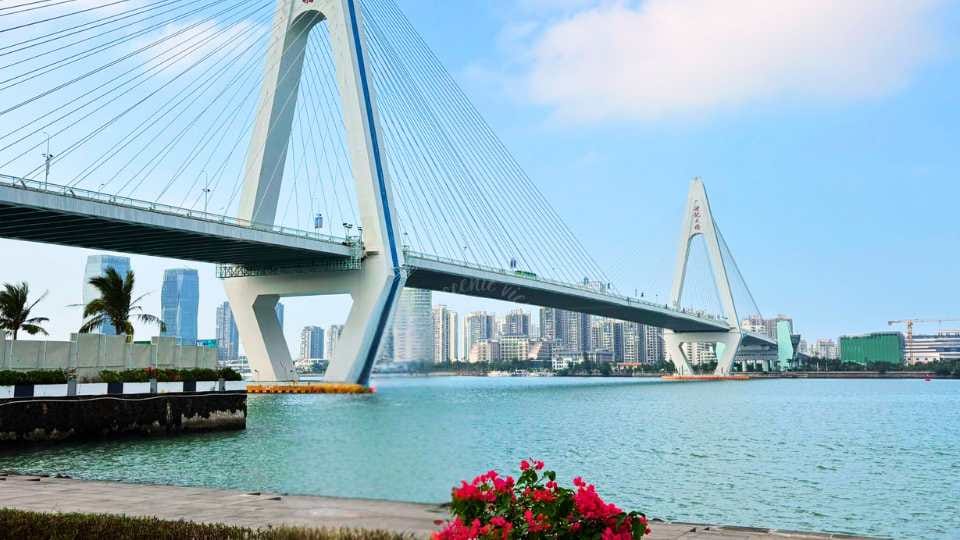
Haikou Century Bridge Over Haidian River ©
Yes.
Transport networks are seamless.
High-speed rail is efficient.
Cities feel safe at night.
Hotels are accustomed to foreign passports.
China is ready.
The more interesting question is whether Western travellers are ready to adapt.
China does not function like Southeast Asia.
It does not operate on Western digital systems.
It does not default to English.
And that’s precisely what makes it interesting.
What Changes
No visa application
No embassy visit
No processing wait time
Lower administrative costs
More spontaneous planning
What Doesn’t Change
Digital payment reliance
Language realities outside major hubs
Hotel registration procedures
App ecosystem differences
The need for preparation
Visa-free entry lowers the barrier.
It doesn’t dilute the experience.
Having seen China just before visa-free entry begins, I suspect 2026 may offer a rare balance:
Infrastructure prepared
Western tourist numbers still moderate
Strong domestic tourism energy
A country actively re-engaging with global travel
For those curious but previously deterred by paperwork, the barrier is gone.
But the experience remains distinctly, unapologetically China.
And that’s a good thing.
Do UK citizens need a visa for China in 2026?
From 17 February 2026, UK passport holders can visit China for up to 30 days without applying for a tourist visa in advance.
Do Canadian citizens need a visa for China in 2026?
From 17 February 2026, Canadian passport holders can also enter China visa-free for stays of up to 30 days.
Does visa-free mean no entry procedures?
No. Standard arrival and immigration procedures still apply.
Is China easy to travel independently in 2026?
Yes — but preparation is essential, particularly for digital payments and app setup.
China in 2026 is no longer difficult to access.
But it still requires intention.
The paperwork is gone.
The complexity isn’t.
And for travellers willing to adapt, that’s exactly why China remains one of the most compelling destinations of the year.


